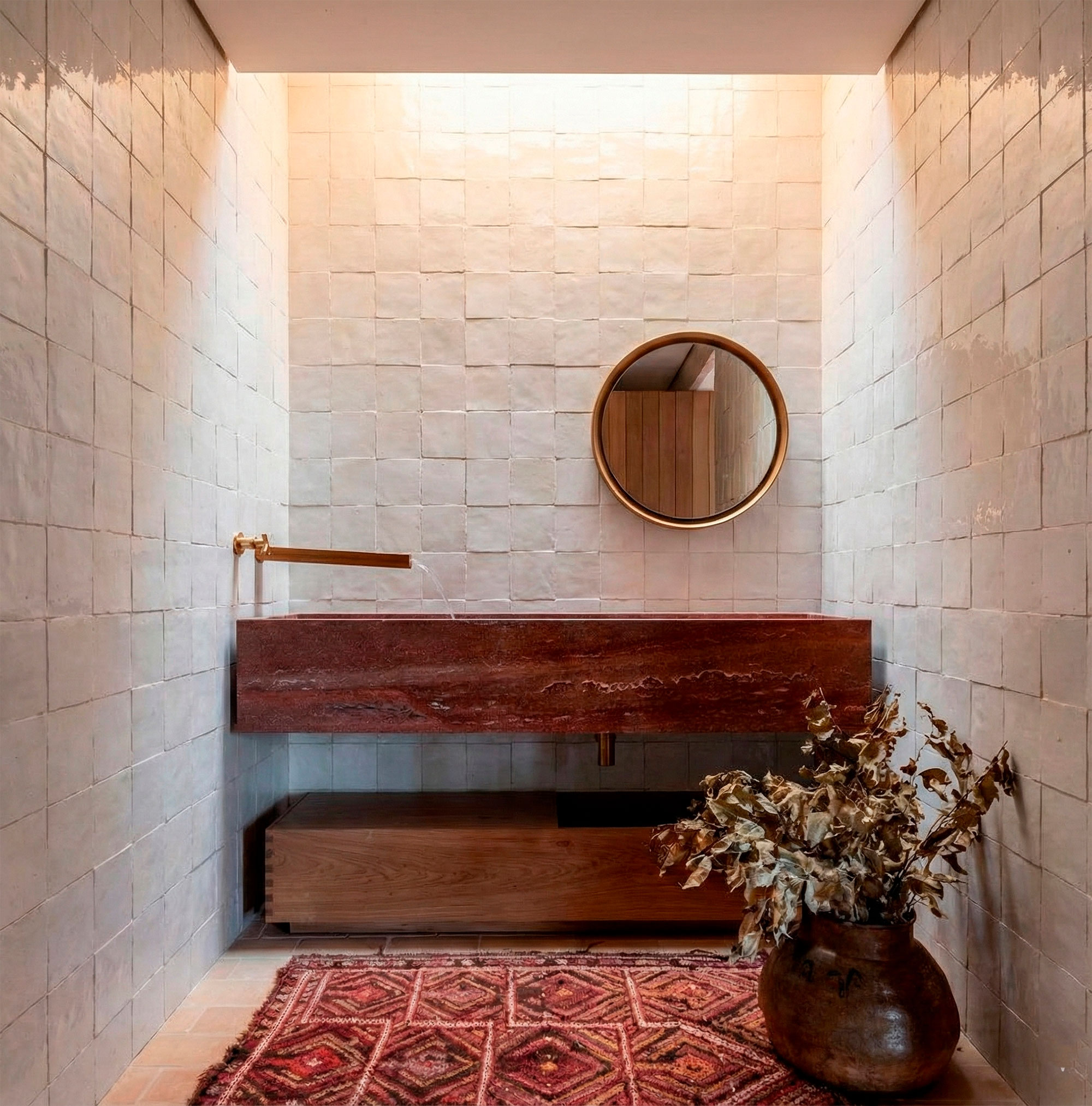
Zellige care

How to clean and maintain antique zellige ?
Antique zellige carries something irreplaceable: the patina of time. These handcrafted tiles, shaped decades or even centuries ago, have acquired a character that modern materials simply cannot replicate. The gentle wear, softened edges, and the way light reflects differently on surfaces touched by years of use. This is what makes antique zellige so precious.
At Megzo, we have been crafting zellige since 1847. We see these tiles not just as materials, but as living witnesses to a craft passed down through generations. Caring for antique zellige means respecting both its fragility and its resilience.
Understanding what you’re working with
Antique zellige differs fundamentally from modern tiles. The clay was often fired at lower temperatures, and the hand-applied glaze varies in thickness and durability. Some areas may have worn down to the clay body beneath, while others retain their original sheen but have developed fine craquelure, a network of hairline cracks that enhances the tile’s beauty.
This isn’t damage. It’s history made visible.
Before cleaning, examine your tiles closely. Are they fully glazed, or has the glaze worn away in places? Are there chips or cracks? Is the grout original or replaced? Understanding the tile’s condition will help you choose the right care approach.
Daily care: Less is more
The best maintenance for antique zellige is gentle, regular attention rather than intensive cleaning. These tiles have survived for centuries because they are sturdier than they appear but they deserve respect.
For routine cleaning, warm water and a soft cloth are sufficient. No chemicals or special products are necessary. Simply wipe the surface to remove dust and light marks. This small, consistent gesture preserves the tiles without stressing the glaze.
For floors, a soft broom or microfiber mop works well. Avoid anything abrasive. The goal is to clean without wearing away what time has preserved.
Dealing with stubborn marks
Sometimes water alone isn’t enough. Stains or dirt embedded in the glaze texture may require something slightly stronger, but still gentle.
A pH-neutral soap, heavily diluted in warm water, can work wonders. Mix a few drops into a bucket of water, and clean small sections with a soft sponge or cloth never anything abrasive. Rinse thoroughly with clean water, as soap residue can dull the surface over time.
For particularly stubborn spots, a paste of baking soda and water can be effective. Apply gently, let it sit briefly, then wipe away with a damp cloth. This works well on organic stains without harming the glaze.
Avoid acidic cleaners (vinegar, lemon, or citrus-based products), bleach, ammonia, abrasive powders, steam cleaners, and pressure washers. These can permanently damage the glaze, remove the patina, or even crack weakened tiles.
The question of sealing
People often ask whether antique zellige should be sealed. The answer isn’t straightforward.
Sealing can protect porous areas where the glaze has worn away, make cleaning easier, and help prevent stains. But it also changes the tile’s appearance, often adding an artificial sheen that masks the natural patina. Once sealed, ongoing maintenance is required.
If your antique zellige is in a low-traffic area, or if the glaze is largely intact, sealing is usually unnecessary. The tiles have endured for decades or centuries without it.
If you do choose to seal, use a breathable, penetrating sealer designed for natural stone or terracotta. Avoid anything that creates a surface film. Test first on an inconspicuous tile or spare piece to ensure you’re happy with the appearance before treating the entire surface.
Handling damage
Chips, cracks, and missing tiles present challenges. The instinct may be to replace damaged pieces, but finding exact matches for antique zellige is nearly impossible. Even sourced old tiles will have their own history and patina, and they won’t blend seamlessly.
Often, it’s better to embrace imperfections. A chipped edge tells a story; a long-standing crack adds character. Unless the damage threatens structural integrity or safety, consider leaving it as is.
If tiles are loose or grout is crumbling, professional attention is warranted. Modern grout can be too hard for old tiles, causing cracks as the building settles. Traditional lime-based mortars are often more appropriate.
Living with antique Zellige
These tiles were not meant to be museum pieces. They were made to be used, walked on, and touched. Their wear is a testament to lives lived around them. Accepting and even celebrating this changes your relationship with the material.
Do not hesitate to use spaces with antique zellige. Place furniture on tiled floors, splash water on tiled walls, cook in kitchens with zellige backsplashes. The tiles can handle it they always have.
What they ask in return is simple respect. Clean them gently. Avoid harsh chemicals and abrasive tools. Wipe up spills promptly, but don’t panic if every drop isn’t caught immediately. These tiles have endured far worse than everyday life will throw at them.
The Megzo perspective
We craft new zellige using techniques passed down through six generations. When we see antique pieces, we recognize the hands that shaped them. We see the same gestures we practice today, repeated by artisans before us.
This continuity matters. It means we understand old tiles not as antiquities but as siblings to the work we do now. The clay is the same. The glaze recipes, though evolved, follow similar principles. The fundamental craft remains unchanged.
Caring for antique zellige is preserving a connection to that tradition. You maintain not only the tiles themselves but also the knowledge and skill they embody. It is a form of stewardship.
Treat them well, but not too delicately. Use them, enjoy them, and pass them on that is their purpose.
Recent Posts
- Terracotta Tiles Timeless Architecture 16/02/2026
- Terracotta Tiles for Outdoor Spaces 13/02/2026
- Moroccan Tiles from Fes 18/12/2025
- Zellige care 18/12/2025
- Zellige bathrooms 18/12/2025